
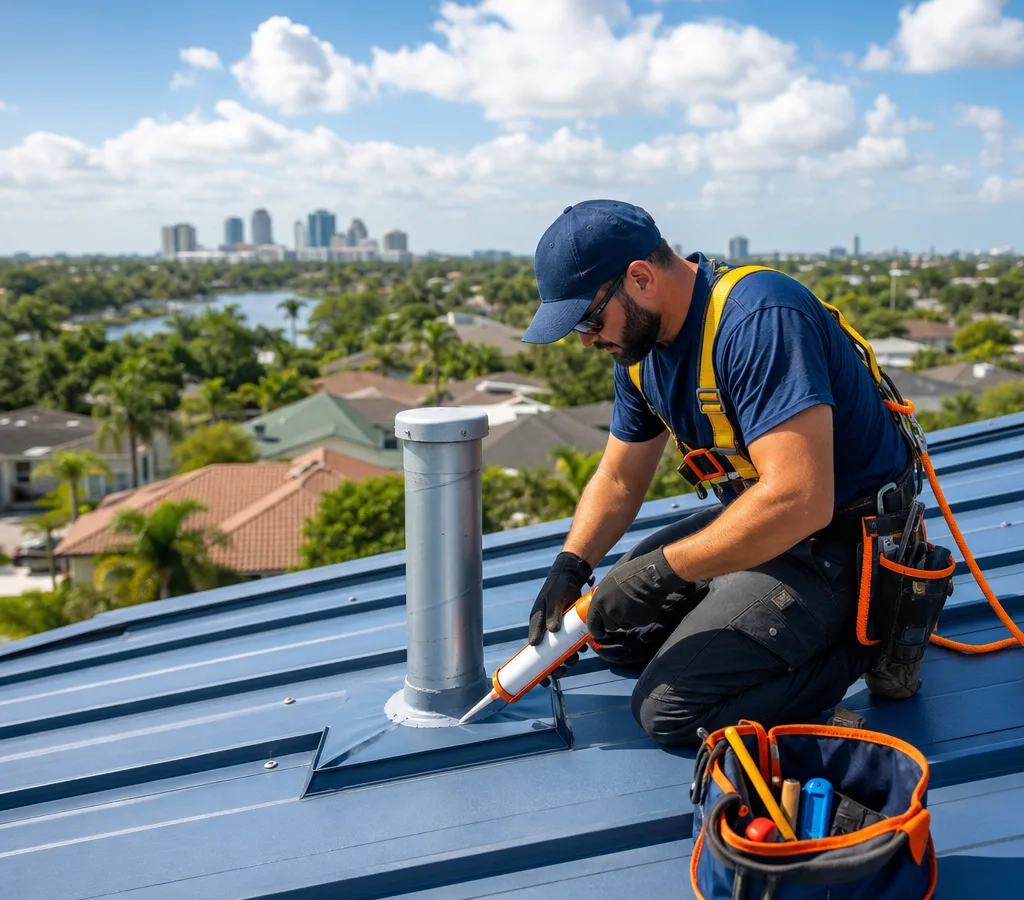
On-roof assessment with photos
We document the suspected entry points, surrounding roof condition, and contributing issues such as debris dams or failed sealant at laps.
Serving Orlando, Florida & surrounding areas
Roof Leak Repair · Orlando, Florida
Stop the drip, protect the deck, and get a clear repair plan based on an on-roof assessment, not guesswork.
Targeted Leak Diagnosis
If you are searching for roof leak repair Orlando, you are usually dealing with one of two problems: active water entry—a drip, stain, or wet insulation—or a roof detail that is starting to fail before you see interior damage. Metal Roof Orlando focuses on finding the actual entry point and fixing the roof detail that caused it, not just smearing sealant where water shows up inside.
In Orlando, leaks can show up after wind-driven rain, long downpours, or when afternoon storms push water sideways into laps and terminations. Many leaks also trace back to small details that move with heat: fasteners that have backed out, aged pipe boots, separation at flashing, or an opening at a wall transition. A proper repair restores a watertight assembly at the exact failure point and gives water a clear path to shed.
You will get a written scope describing what we found, what we recommend repairing, and what we do not think needs to be touched. If the assessment indicates the roof is at the end of its service life, we will tell you plainly so you can weigh repair against roof replacement.
Trace the Water Path
A ceiling stain tells you where water collected, not where it entered. Water can travel along purlins, underlayment, fastener lines, and valleys before it drops into insulation or drywall.
Our leak repair approach starts outside, at the roof. We inspect the common leak paths on metal systems and surrounding transitions:
When appropriate, we can perform a controlled water test after identifying likely entry points. Roof conditions are documented first so the test confirms the diagnosis instead of creating new problems. The result is a targeted repair—not a broad coating of sealant that fails during the next heavy rain.
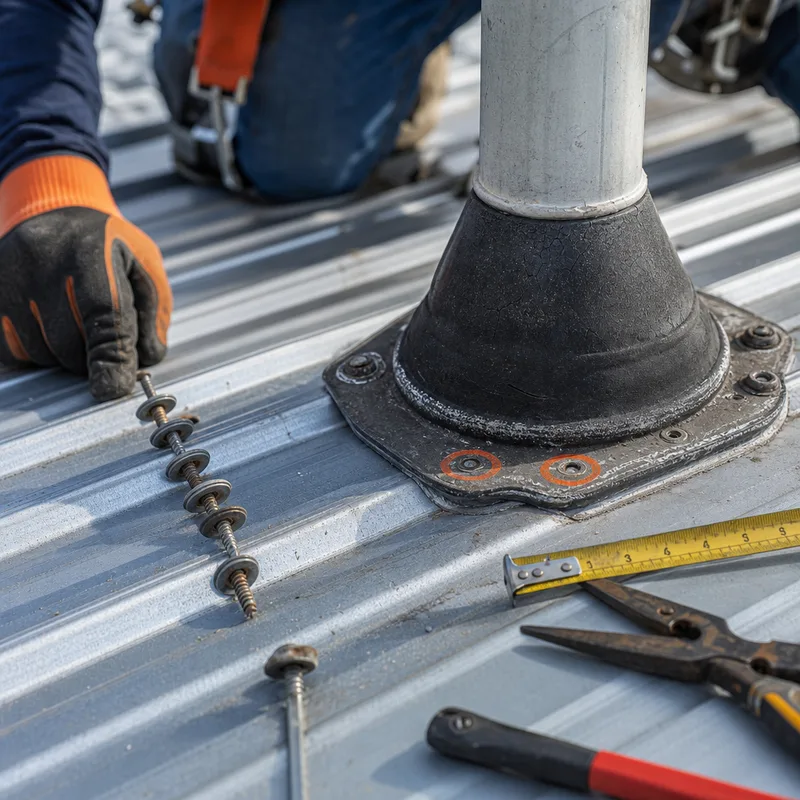
We document the suspected entry points, surrounding roof condition, and contributing issues such as debris dams or failed sealant at laps.
Repairs focus on the component that failed—boot, flashing, seam, fastener pattern, or termination—using compatible materials and proper preparation.
We protect landscaping and surfaces, control debris, and leave the area tidy so the repair does not create a second problem.
You will know what is being repaired, what is excluded, and what conditions could change the plan once the area is opened.
If the roof has widespread issues, we explain the tradeoffs so you can decide whether to repair now or plan a larger project.
Orlando Leak Patterns
Most roof leaks come from predictable places. The hard part is confirming which one is active on your roof and fixing it in a way that matches the roof type.
Penetration leaks. Pipe boots and flashing collars age in the Florida sun. When a boot cracks or loses its seal against the panel profile, a lasting fix may require replacing the boot and reworking the fastener pattern—not merely sealing the top edge.
Fastener and washer failures. Exposed-fastener metal roofs rely on screws and neoprene washers. Repair may involve installing the correct fastener size and type, restoring the washer-line seal, and addressing panel distortion or enlarged holes.
Seam and lap issues. Separation at an end lap or side lap can pull water under the panel during wind-driven rain. Repairs often include re-securing the lap, using suitable sealant or tape where appropriate, and confirming overlap and alignment.
Wall transitions and flashing. Where a roof meets a wall, dormer, or parapet, gaps at counterflashing or termination points can funnel water behind the system. These areas require proper flashing geometry and secure terminations.
Valleys and drainage pinch points. Valleys move significant water during Central Florida downpours. Debris buildup or improper detailing can create ponding and push water beneath adjacent roof components.
Local conditions influence where we look. Wind-driven rain near Conway and Lake Underhill can expose weak terminations. Added vents or mounts in Baldwin Park can make penetrations likely suspects. Older Winter Park homes may have several roof-to-wall transitions, while tree-covered Downtown Orlando properties often develop clogged valleys and gutters that back water under roof edges.
Get Your Instant QuoteWe start with what you have observed: where the stain is, when it leaks, whether it is tied to wind direction, and how long it has been happening.
We inspect the roof surface and transitions, look for active paths and contributing issues, and document the findings with photos.
You receive a clear plan for the repair, including the specific details being addressed and any access or weather constraints.
We clean and dry the surface, remove failed sealant, complete the detail repair, and replace components as needed.
We verify the repaired area, note any additional concerns observed, and leave the work area clean.
Repair Pricing Factors
Roof leak repair in Orlando typically ranges from about $250 to $1,200 for a targeted repair, while more involved work around multiple penetrations, valley corrections, or flashing rebuilds can run $1,500 to $3,500+. Your price depends on roof height and access, the leak source—fasteners, flashing, or seams—how much material must be removed and reinstalled, and whether wet insulation or decking issues are discovered. Exact cost is confirmed after an on-roof assessment and a written scope.
Get Your Instant QuoteAct Before Water Spreads
If you have an active leak or fresh staining, getting eyes on the roof quickly helps prevent soaked insulation, ceiling damage, and hidden wood rot.
Straight Answers
Yes, many leaks are isolated to one detail such as a pipe boot, a backed-out fastener line, or a flashing termination, and a targeted repair is often the right first step. The key is confirming the roof-level source because interior symptoms can appear several feet from the entry point. If assessment reveals widespread issues, we will explain why a larger scope may be more cost-effective.
Most leak situations can be scheduled quickly, with timing depending on weather windows and roof access. Safe, lasting repairs generally require dry surfaces and proper preparation, so heavy rain can shift the schedule even when the leak is urgent. We will explain what can be done immediately and what should wait for suitable conditions.
Yes. Metal roof leaks commonly involve exposed fasteners and washers, seam and lap separation, or failed penetration flashings. A durable repair usually includes replacing the correct fasteners or boots, reworking the detail, and using compatible sealants rather than layering unrelated products.
Contain water indoors with a bucket or plastic sheeting, protect valuables, and photograph staining so you can track changes. Avoid climbing onto the roof, especially after rain. If you can safely access the attic, note whether the leak appears near a penetration, valley, or wall line, but do not disturb wet insulation.
Sometimes sealant is part of the fix, but coating over a leak without correcting the underlying detail often fails under heat movement and heavy rain. Proper repair starts with diagnosis, surface preparation, and restoration of the flashing or lap geometry. Any coating should be compatible with the roof and applied over a properly repaired substrate.
We match roof conditions to the leak pattern and inspect common entry points first: penetrations, laps, fasteners, and terminations. When needed and safe, a controlled water test can help verify a suspected point. We document findings so you can see what was repaired and why.
Start With an On-Roof Assessment
Tell us what you are seeing and when it happens. We will inspect the roof, document the likely entry point, and provide a straightforward scope to stop the leak with clean, careful work.